Jour 2 : franchir la fenêtre d’Arpette
In 2023, during my Tour du Mont Blanc, I kept hearing hikers talk about a famous pass: the Fenêtre d’Arpette. It was apparently an unmissable variant on the TMB, as long as you had a good weather window, hence perhaps its name. It involved a fairly steep and rugged climb, with a succession of scree fields in the final part of the ascent. At the time, with a very rainy day forecast, I had decided to skip it and take the regular route. This is not a place to take lightly. Several people have already lost their lives there after slipping on the cliffs. Just yesterday, a hiker told us about being rescued by helicopter after venturing into the wrong area on the pass.
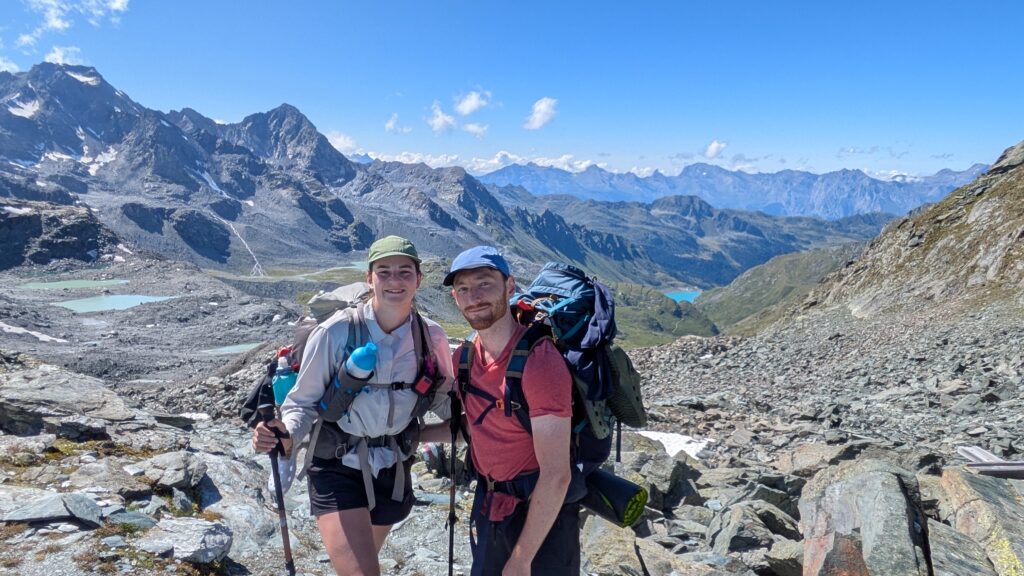
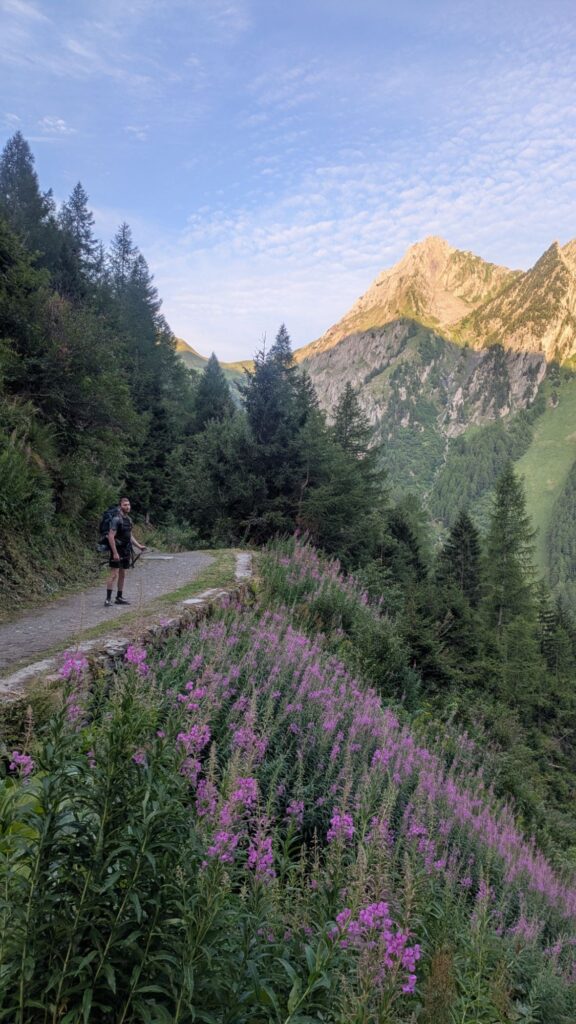
Today is different. Conditions look very good this morning, at least until early afternoon. Erik and I therefore decide to take on this trail, starting very early at 6:00 a.m. Waking up before dawn is hard for me, I am a night owl, but the reward of hiking in the first light of day is immense. Especially since the first kilometres this morning are on a flat trail with no obstacles at all.
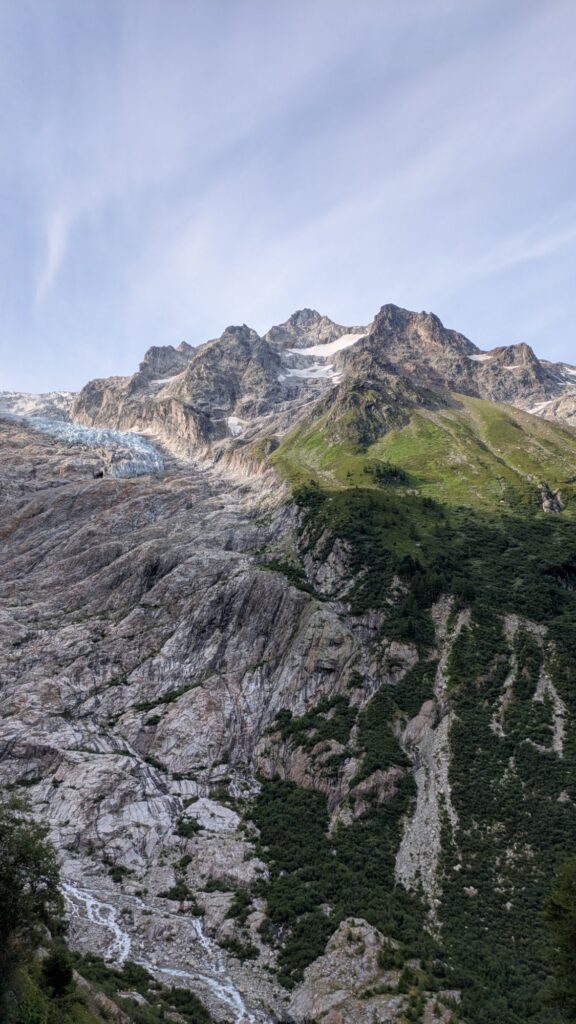
After a few kilometres, we catch sight of the impressive Trient Glacier, which will accompany us for the entire climb. And it is far from restful. Even though I walked 3,000 kilometres last summer, it almost feels like I am starting from zero again. I can already smell tomorrow’s muscle soreness.
The ascent is sustained and sometimes requires the use of hands for certain sections, but overall it is less difficult than I had imagined. Fortunately, the sun has not yet reached the side of the mountain we are on, which makes the climb much more manageable.
Halfway up, we spot a small hut owned by Pascal, a retiree with a thirst for solitude and mountains. Three months a year, he lives cut off from society in a tiny cubicle, enjoying views of the glacier and the fresh mountain air.
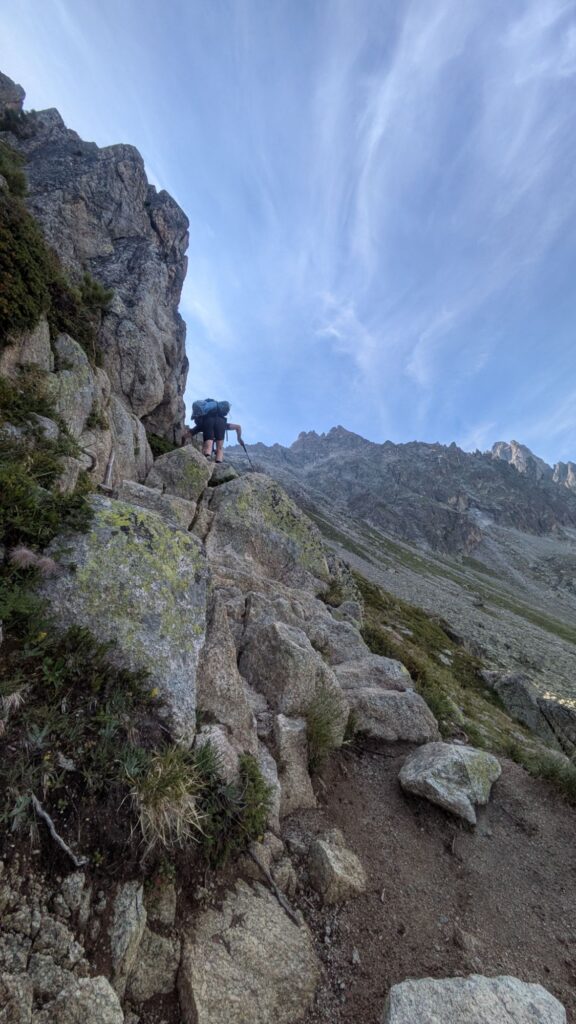
After several hours of climbing and losing a lot of sweat, we finally reach the Fenêtre d’Arpette. We meet another Canadian, Tyssen, as well as a couple from Quebec. A funny detail: since the beginning of the adventure, most of the people we have met are Canadian. It must be that we really love these Alps.
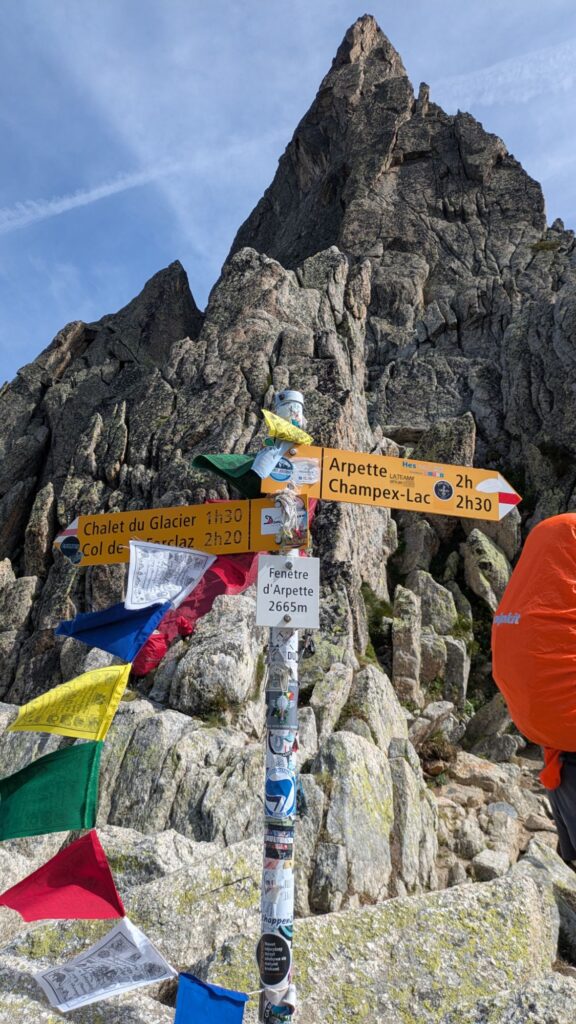
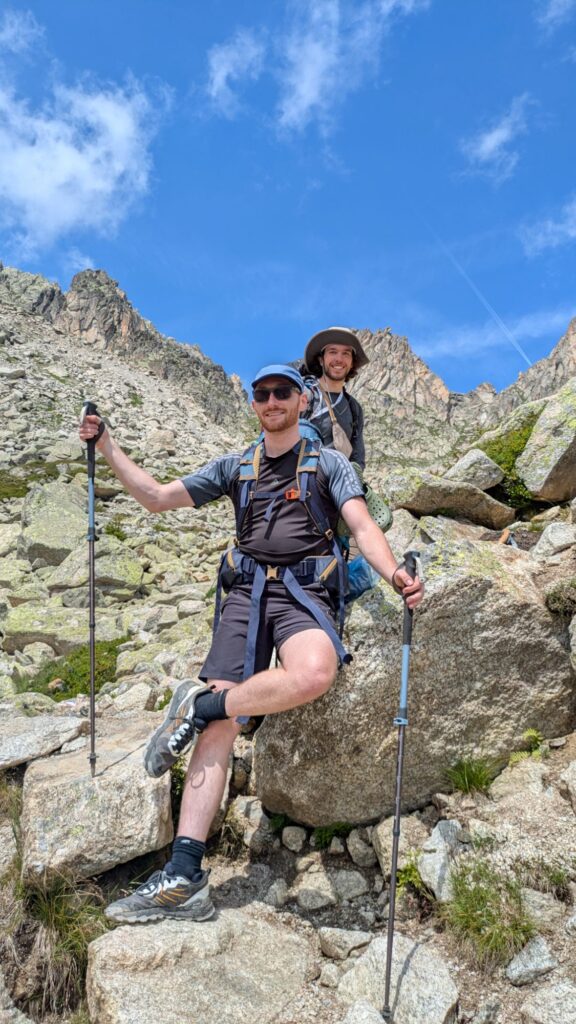
After a short break at the top, we begin our descent with Pascale and Hugo, a couple from Quebec. The descent consists of large scree fields and puts our knees and balance to the test.
As I greet an older couple of hikers, they warmly exclaim, “Ahhh, you’re from Quebec!” Busted at my very first hello. The duo turns out to be in love with Quebec and its people. Pascale and Hugo quickly join us, to the great delight of these two Swiss hikers. They offer us a tasting of homemade wine, Gruyère cheese, and sausage. They tell us about a book on local plants and flowers that they are currently studying.
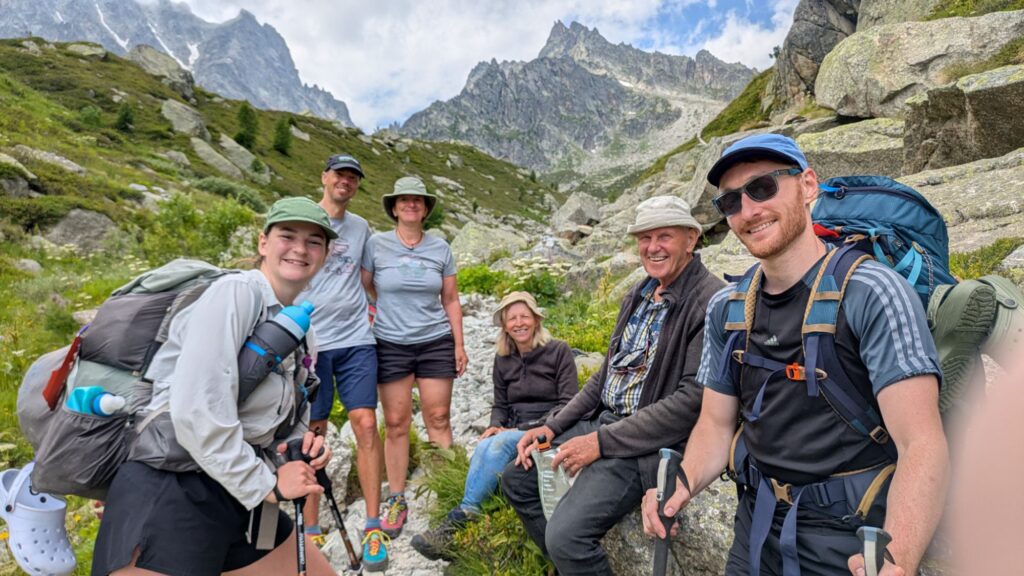
I have such great respect for these people who, well into their eighties, continue hiking, and not on easy terrain either. If I can be like them later in life, that would be wonderful.
After several hours of descent, we arrive at the Fenêtre d’Arpette refuge, where we are welcomed by a group of traditional Swiss musicians. Far from wanting to laugh, but I cannot help thinking that these instruments look like giant sized pipes.
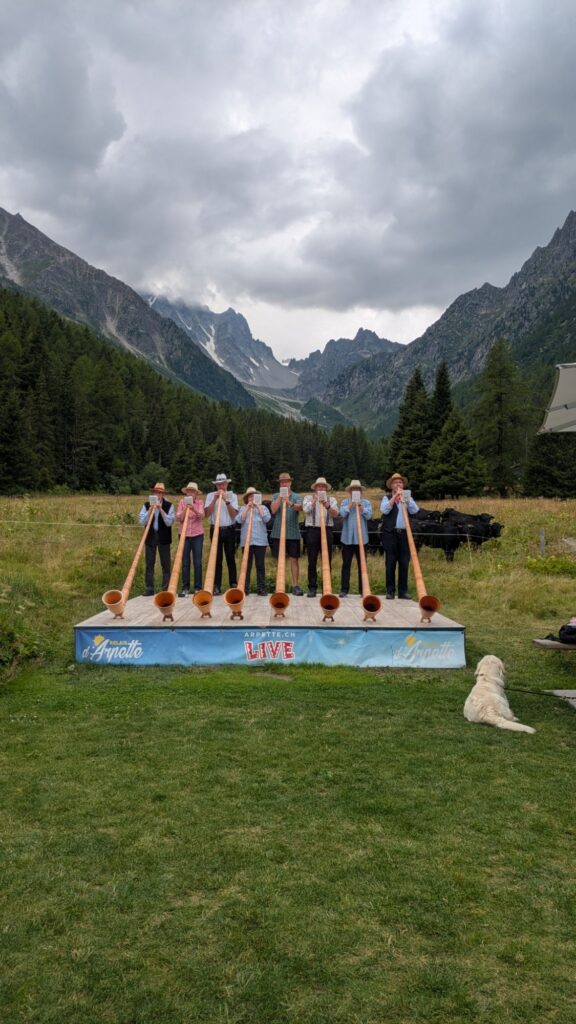
We pitch our tents at a campground near Lake Champex, apparently the x is not pronounced. Proof that we are indeed in Switzerland: we have to pay 23 Swiss francs per person, and we find a tiny bag of chips sold for 10 Swiss francs.

Day 3: Transition
Today’s morning is more ordinary than the others, due to a long flat section along roads. A trail cannot be spectacular all the time, and boring stretches help us better appreciate extraordinary landscapes. We therefore start the section from Champex to Le Châble under a light rain that quickly fades, giving way to a blazing sun. There were major storms last night, and I was very glad to be in an official campground. For now, the weather is much kinder than forecast. Rain at night, sunshine during the day. Much better than the opposite. The only downside is that my tent, soaked with water, must weigh at least one kilogram more.
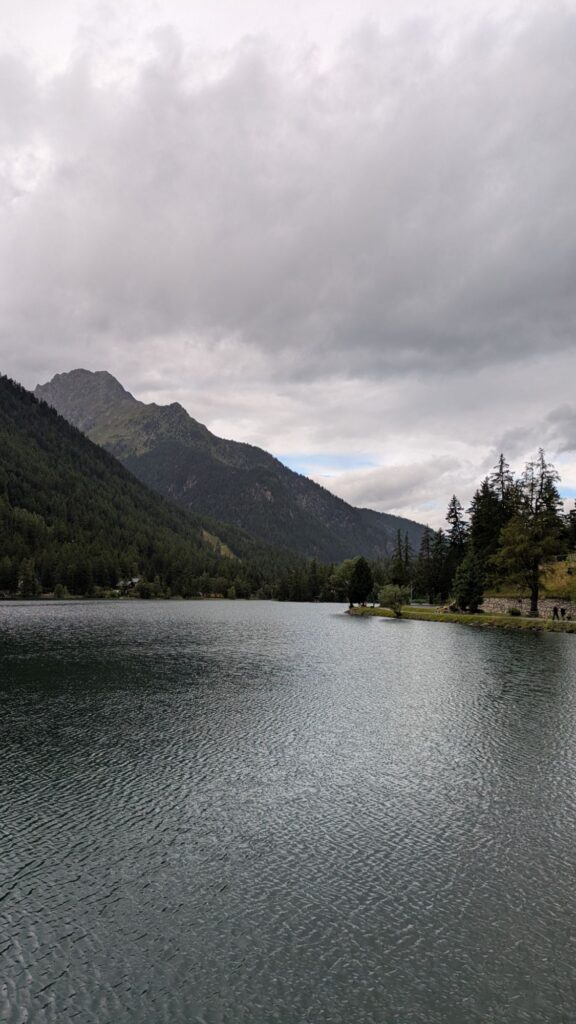
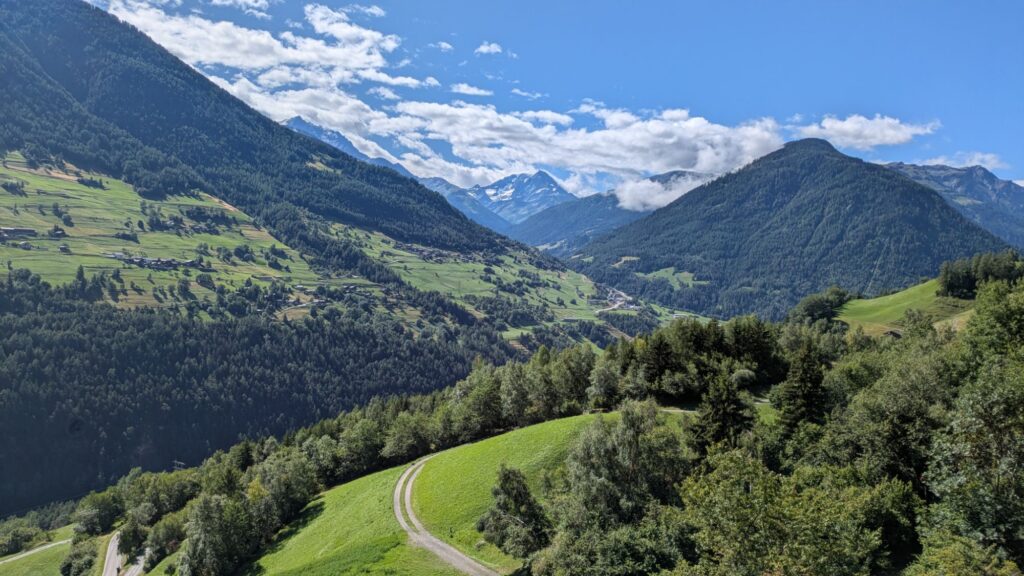
The first part of the trail runs along a beautiful green valley from above. It is a pleasant walk.
Very quickly, we reach a flat road section. This type of terrain is often where my feet suffer the most. There is no variation in steps, and due to the monotony of movement, my arches become painful quite fast.
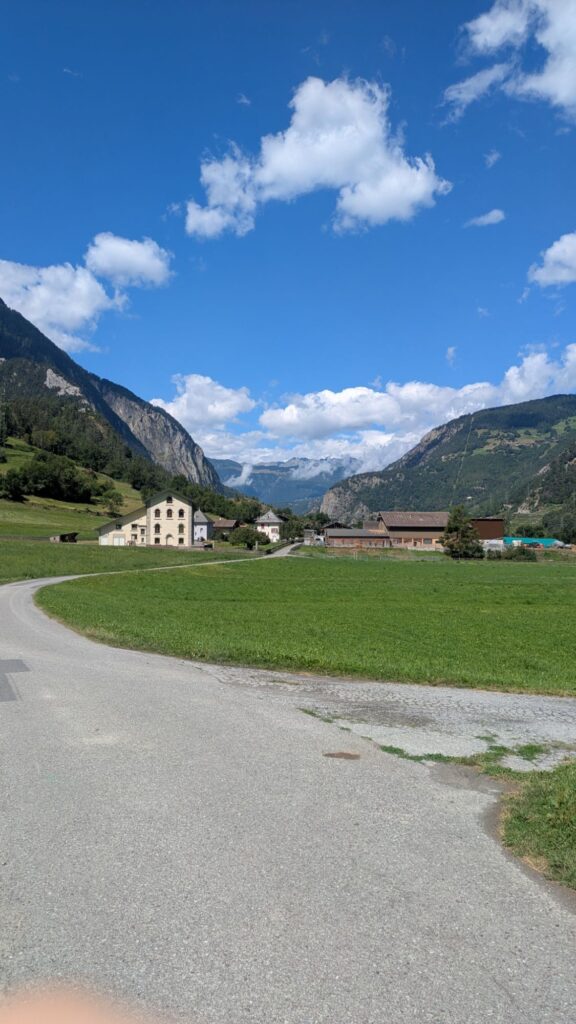
Arriving in Le Châble at only 12:30 p.m., we feel like eating at a restaurant. It is funny, I managed to eat pasta every day for five months on the HexaTrek, and now, after only three days on the trail, I already want something different.
Tyssen, Erik, and I treat ourselves to a good meal of pork ribs, potatoes, and beans. The restaurant owner is very friendly. He gives us advice on bivouac spots and even calls his guide friend to check the legality of our planned location. In Switzerland, bivouacking is governed by very strict laws. He tells us that it is tolerated to bivouac near the Cabane du Mont Fort.
To avoid a huge, uninteresting climb under ski lifts toward the Ruinettes ski station, we decide to take a cable car. It is Erik’s first time experiencing this, so we might as well enjoy it. We only have ten days to complete this trail, and I know in advance that we will have to cut a few sections. I want this first adventure to be memorable for my partner, and I do not want him to feel rushed to accumulate kilometres. I therefore have no regrets about skipping a few less interesting sections. Sorry, purists.
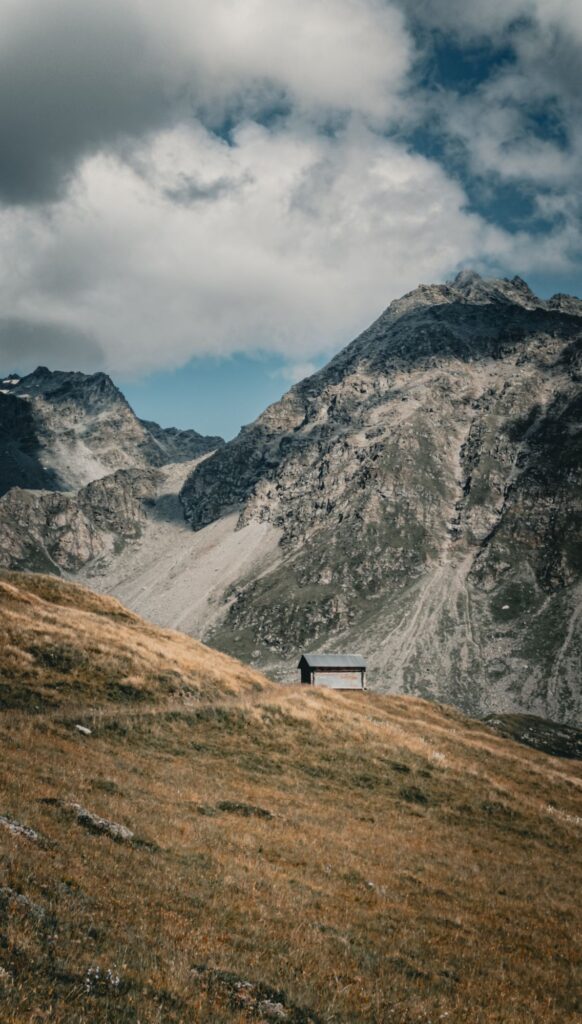
The last part of the day is magnificent, with views of the Cabane du Mont Fort and a multitude of peaks over 4,000 metres. We stop near an alpine pasture and ask for permission to pitch our tent nearby.
Understanding my fear of thunderstorms and seeing the sky darken quickly, they are extremely kind and allow us to bivouac nearby and even take shelter in their barn if needed.
In the end, only a few distant rumbles of thunder are heard, and the sky calms down.
Tomorrow, a big day awaits us. We will have to climb three passes above 2,900 metres.
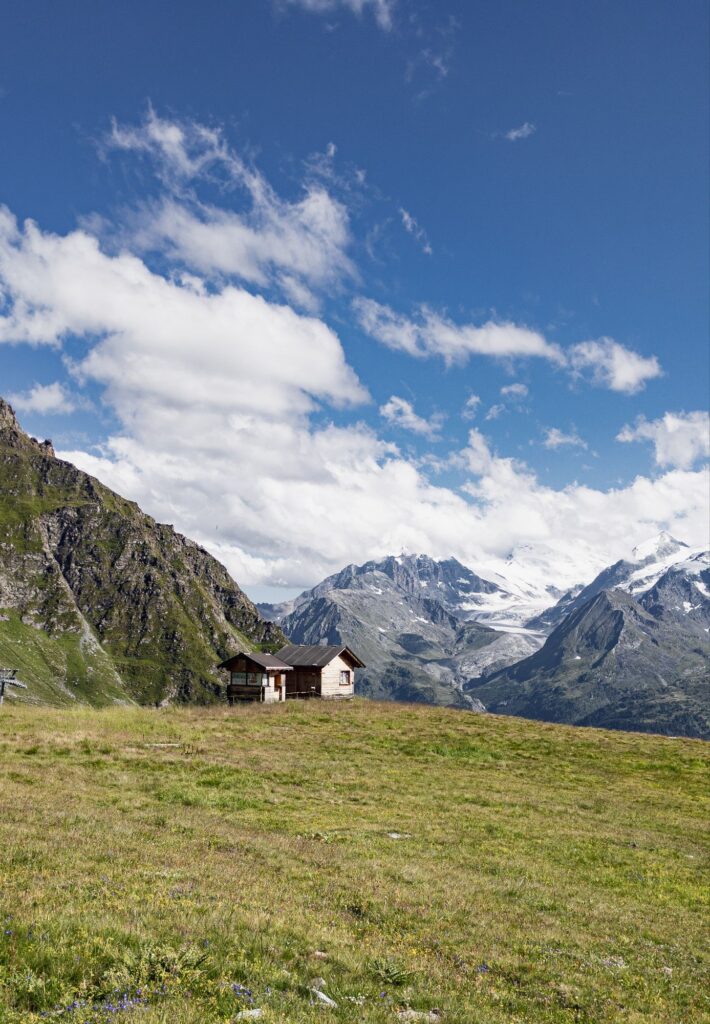
Day 4: Three Passes in One Day
Today’s plan includes the Col Termin via the Chamois Trail, the Col de la Louvie, and the Col de Prafleuri. It is a packed day, which my guidebook describes as magnificent and spectacular.
However, it fails to mention that the Chamois Trail is actually an exposed alpine trail with airy sections.
We therefore start our day very early, as bivouac rules require, and make a first stop at the Cabane du Mont Fort to hydrate with a good coffee. Let us not think too much about the prices, friends. We then commit to the famous Chamois Trail, marked with blue paint instead of the usual red. At first, we think it might be a trail also open to mountain bikes.
After about thirty minutes, we realize that this is absolutely not a trail for mountain bikes, but rather a mountaineering trail. We come across a small sign warning of rockfall risk and stating that mountaineering equipment is required beyond this point. For a moment, I think I may have taken the wrong path. Never did the guidebook mention dangerous trails. Yet, after checking, there is no mistake. This is indeed the route. Seeing several hikers continue on the trail, we assume the sign may be there due to the large number of tourists, to discourage beginners.
The trail is not very technical, but it is extremely exposed and narrow. A fall could be fatal. If it were not so vertiginous, this hike would have been easy.
I turn around and see Erik, pale as a ghost. I ask him if he is okay. He says yes, but I can tell that is not true. I ask if he wants to continue. He thinks for a moment and says yes.
A few minutes later, I see him sit down, legs trembling, face white as a sheet. This time, I make the decision. We turn back and take another route. Erik admits his fear of heights. He is afraid of slipping. Pushing one’s limits is not always healthy. Sometimes true courage is knowing when to turn back. Charging ahead without acknowledging danger is ego, a desire to prove something. I am proud of him for opening up. That is not easy.
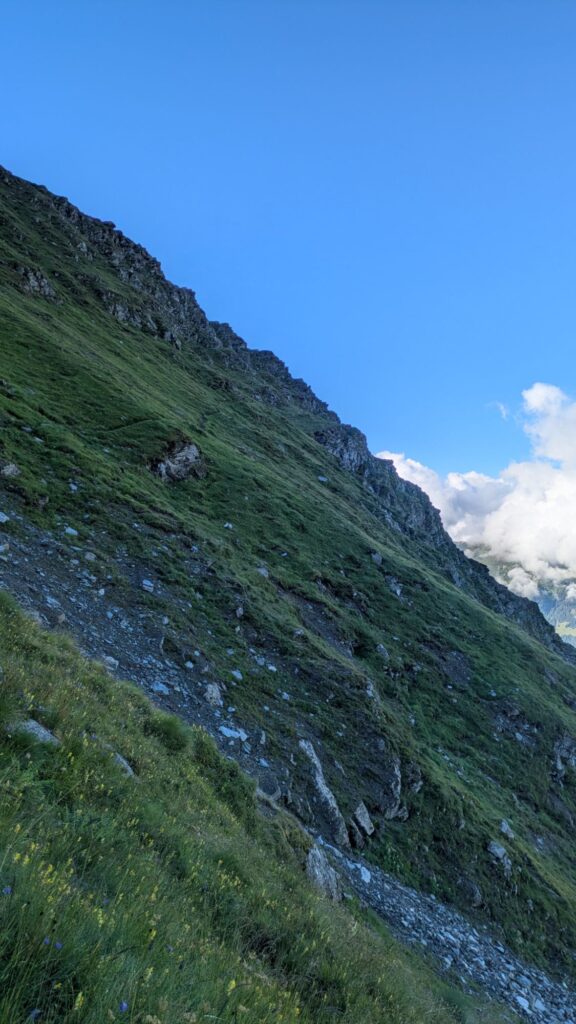
We turn around and head back toward the Cabane du Mont Fort. Decision made: we will take an alternative route via the Col de la Chaux. Erik feels much better, and so do I. To be honest, I did not feel like risking my life on that trail either. We start a long zigzag climb toward the beginning of the ascent to the Col de la Chaux. It is demanding but technically easy… until we reach a junction and, once again, see the cursed blue markings. Another alpine path, really? This time, the danger is not exposure but steepness and the lack of clear markings. Erik is more in his element here, while I am the one feeling stressed. But one step at a time.
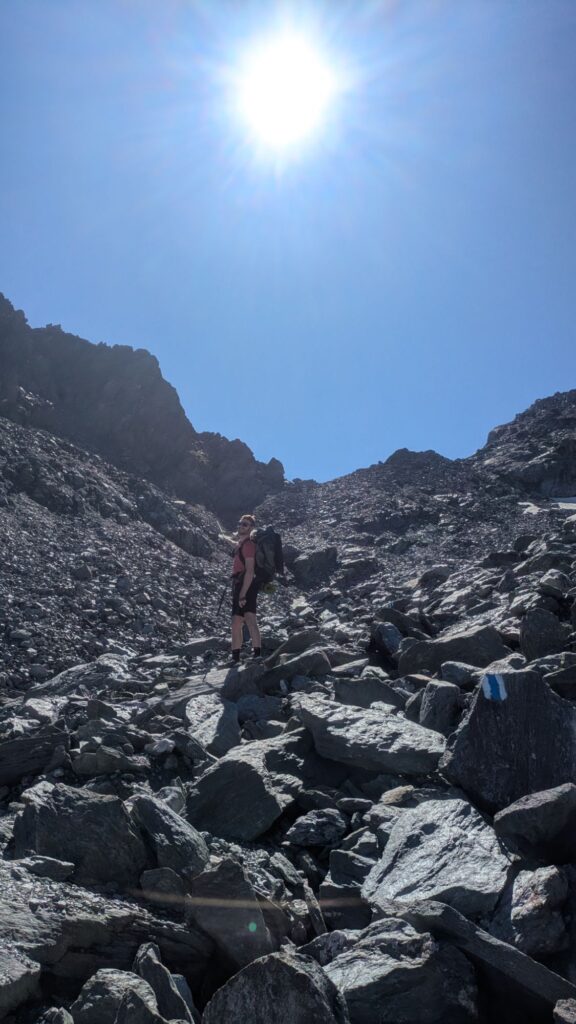
Fortunately, as we progress, the climb feels a bit less steep, and step by step, we reach the summit. On the other side lies a wild desert of scree. We feel completely alone in the world. The descent is frightening for me, but thankfully very short. Time estimates in Switzerland are, how should I put it, optimistic. The Swiss have mountains in their genes from a very young age. They move through trails like chamois. To give you an idea, the sign at the top of the Col de la Chaux indicates 1 hour and 5 minutes to reach the Col de Louvie. It takes us almost three hours. Oops.
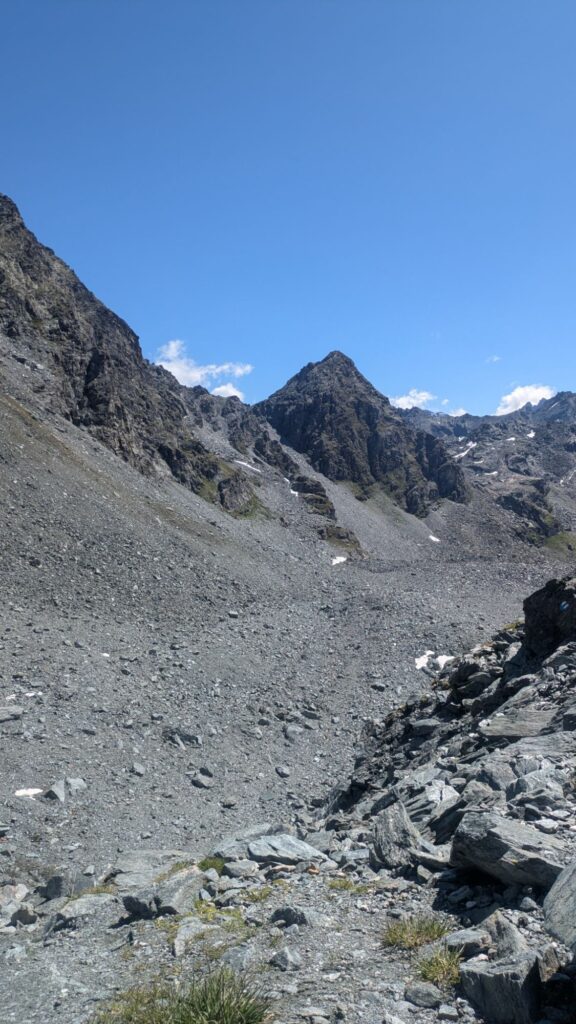
After a lunch break, we cross the Col de Louvie. One more pass down, but the day is far from easy. Fortunately, the sun is with us, and we are dazzled by the harshness and immensity of the landscape.
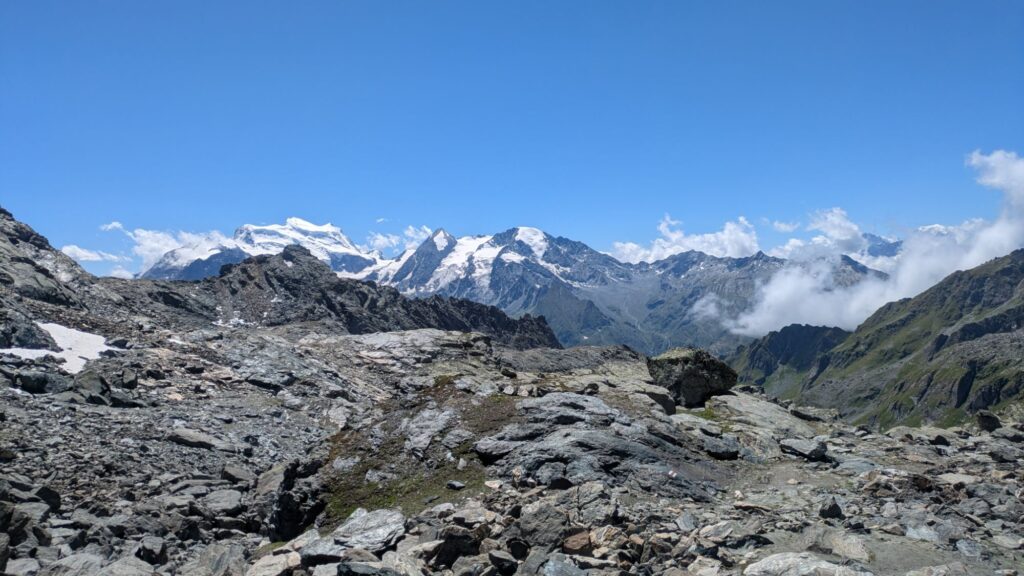
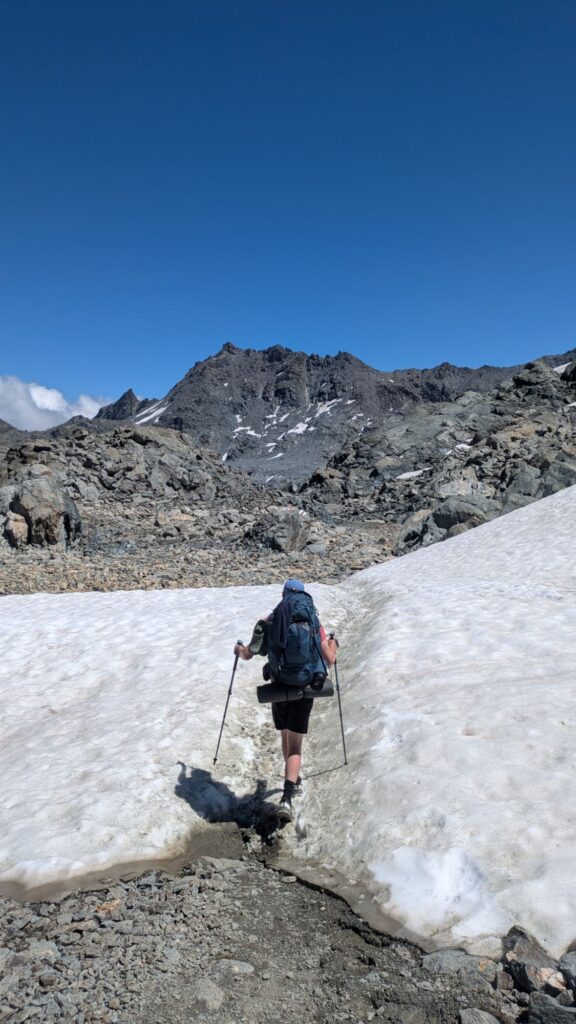
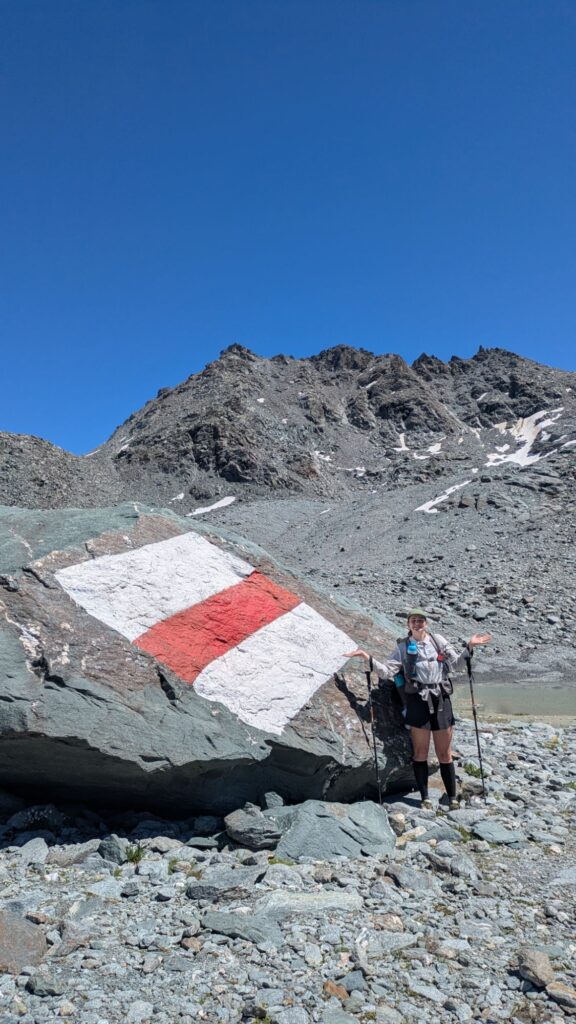
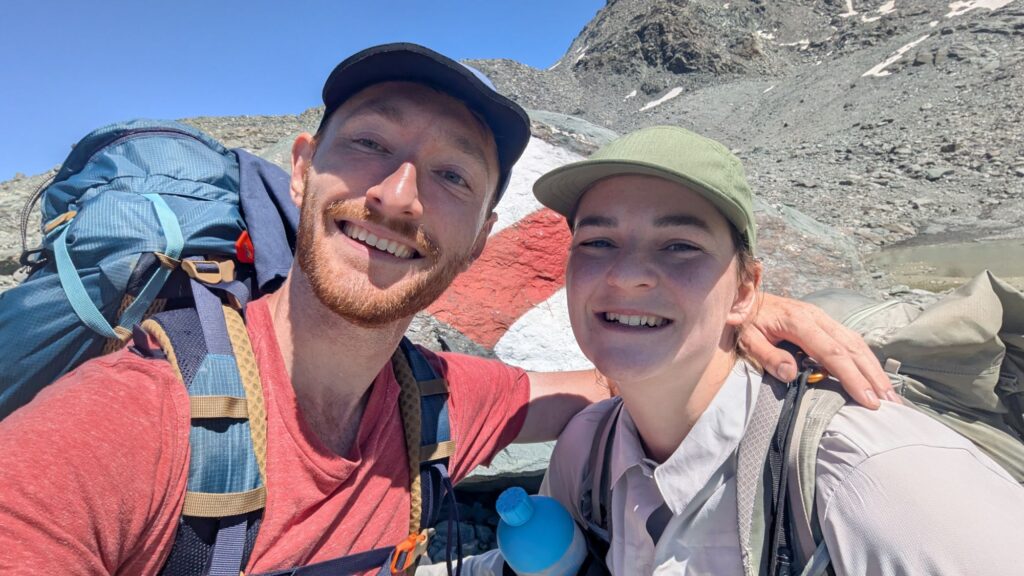
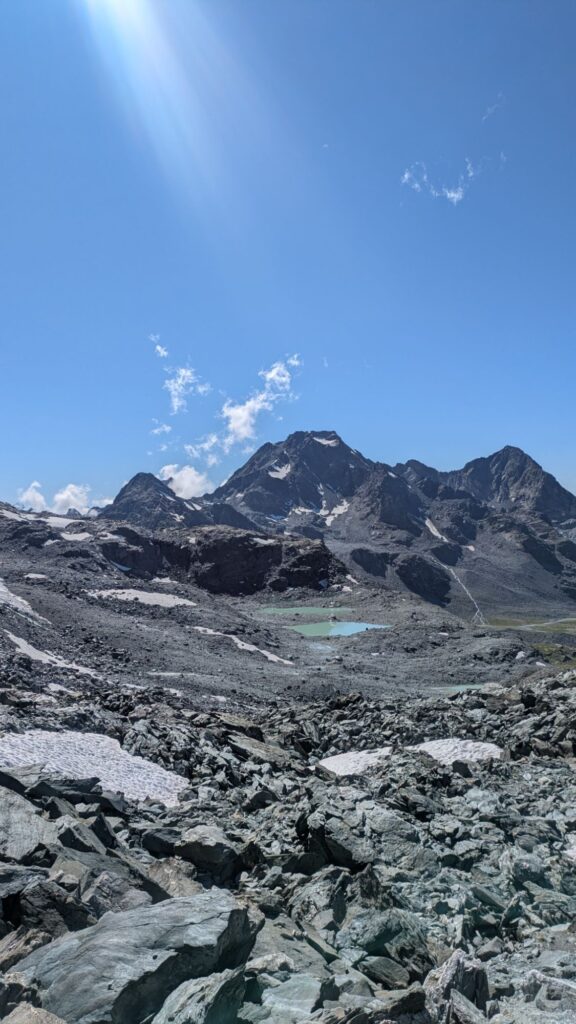
With the help of caffeinated electrolytes and many handfuls of candy, we finally reach the Col de Prafleuri. All that remains is a long descent to the Prafleuri refuge.
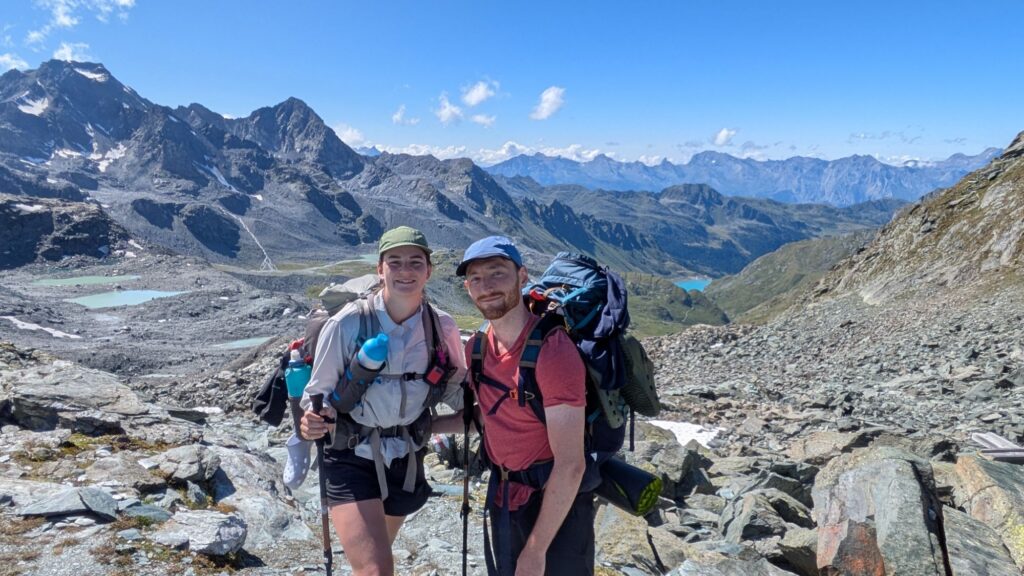
During the descent, we come across a strange scientific station with various measuring instruments. I feel like I am in the movie Interstellar, searching for a new habitable planet.
The guardian of the Prafleuri hut is extremely friendly. The main refuge costs 32 CHF per night, without food of course, but she offers us a night in the old dormitory for 10 CHF. The old dormitory is very comfortable, with mattresses and blankets. There is no light, but that is the least of our worries.
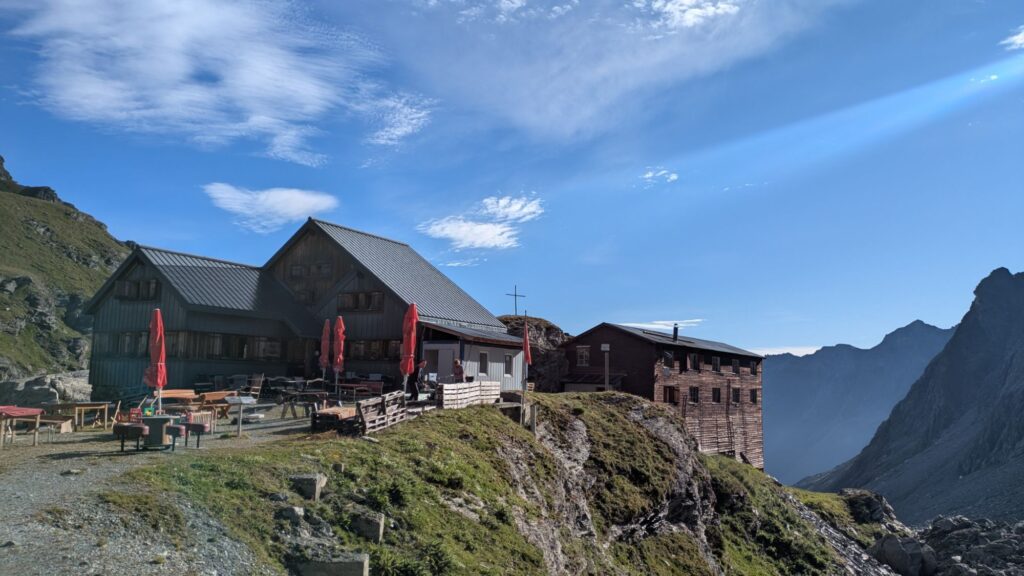
After a good dinner, we turn off the lights, figuratively speaking since there are none, at the late hour of 8:30 p.m. It has been a long time since I went to bed so early. Tomorrow, another big day awaits us: the climb to the Col de Riedmatten.