
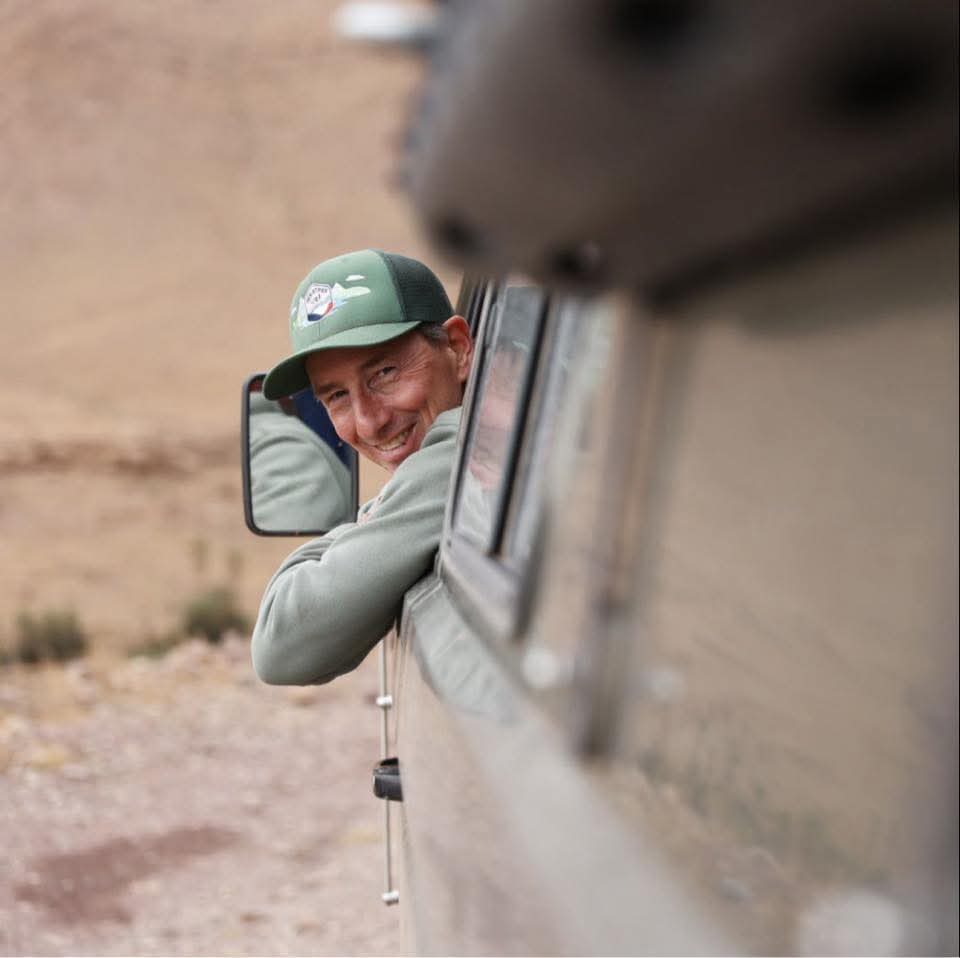
When Hugo Lespagnol sets out on the HexaTrek in 2024, a trail stretching more than 3,000 kilometres across France, he is not chasing a sporting achievement. What he is seeking above all is space. Space to breathe again. His story is that of a man who rose back up, step by step, after an aggressive cancer and the premature loss of his wife, Anne.
The Great Crossing of France
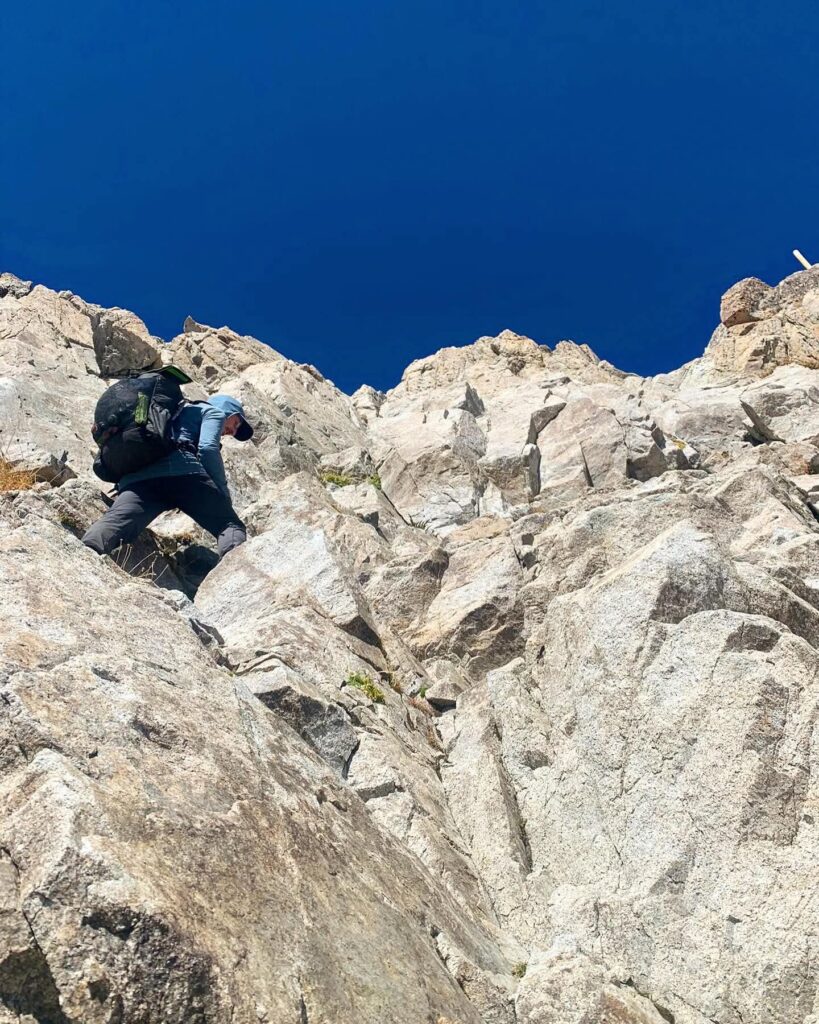
May 31, 2024. At fifty one years old, Hugo, originally from the Grenoble region, takes his first steps onto the HexaTrek trail in Wissembourg, France. Over the coming months, each day will bring him a little closer to his final destination: Hendaye, 3,034 kilometres away. Fully self supported, he will spend most of his nights under a simple shelter, separated from the outside world by a thin layer of fabric, far from cities and noise. A total immersion in nature awaits him.
It is, without question, a major challenge. His only previous experience consists of a single night of bivouacking in the Vercors. A very small outing compared to the months of hiking that lie ahead. But he is ready. He has been dreaming of this moment for months, even years. Now, the time has finally come.
His departure takes place just a few months after the death of his wife, Anne, who fought cancer for eighteen months.
But the story begins earlier. In early 2021, Hugo learns that he has multiple myeloma, a blood cancer that attacks the bone marrow. At the time of diagnosis, several bones are already affected, and treatment with subcutaneous chemotherapy injections begins quickly.
Then comes complete isolation. Hugo has to spend a month in a sterile room in order to receive a stem cell transplant. It is hard for him, extremely hard. Fortunately, during this exhausting stay, he comes across a book purely by chance that will change the course of his life: Tying a Trail to the Past by Michaël Dessagne, the account of a journey on foot across the United States along the Pacific Crest Trail. This reading rekindles a flame within him, and an idea slowly takes root in his heart: one day, he too will walk one of those great long distance trails.
Remission
The transplant is successful. Hugo leaves the hospital on oral chemotherapy, exhausted. Walking for just a few minutes feels like a challenge. Yet he holds on. Each outing becomes a victory. He comes to see each one as his own Pacific Crest Trail. Together with Anne, they begin making plans again, imagining future travels, relearning how to enjoy life.
But in early 2022, tragedy strikes once more. Anne is diagnosed with lung cancer. A new battle begins, lasting a year and a half. Hugo absorbs the shock, supports her, stays by her side, even as his entire world collapses again.
After Anne’s death, the idea of a long trek becomes more than a dream. It becomes a necessity. Hugo had already discovered the existence of the HexaTrek while browsing online. Committing to it now feels like the only possible way forward, a way not to sink.
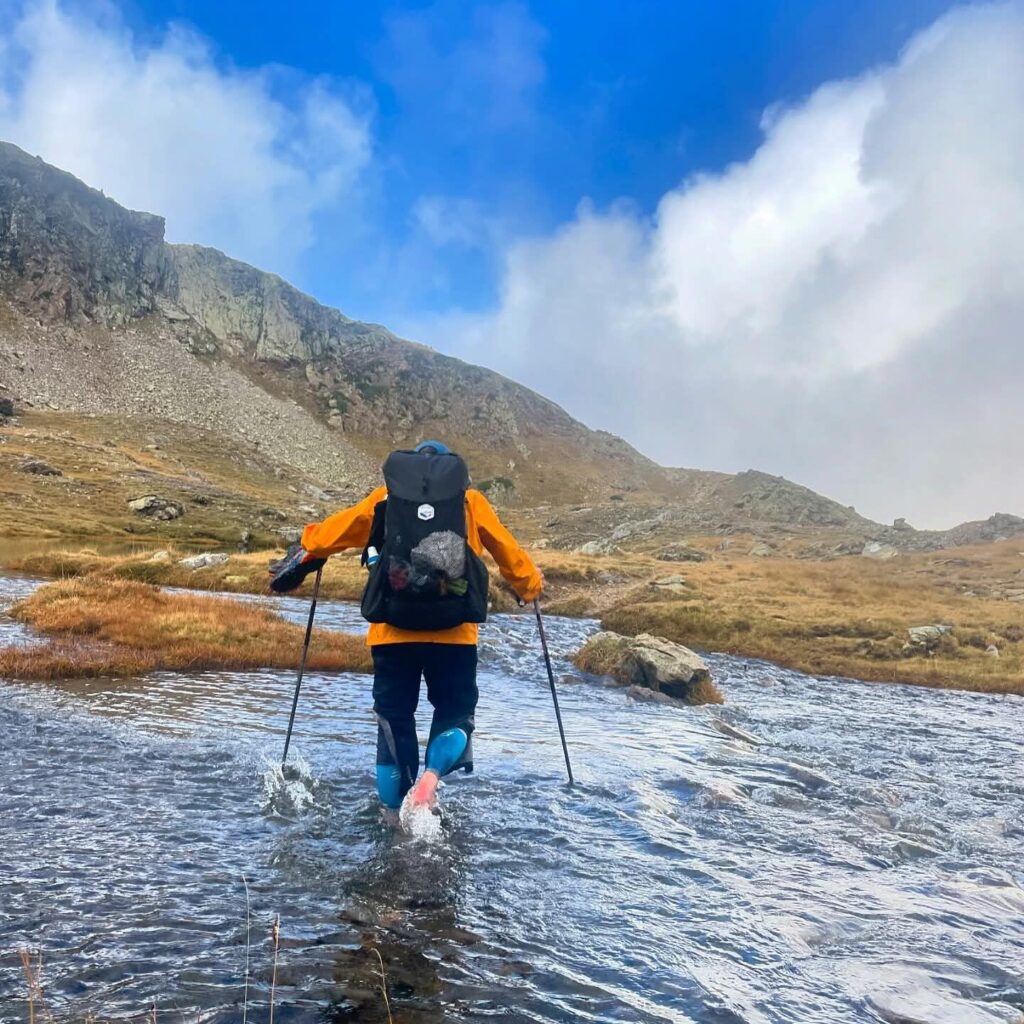
On the trail, Hugo is not chasing performance. He moves at his own pace, attentive to his body, but also to everything around him. The landscapes, of course, but above all the encounters. He realises he is far less solitary than he once believed. Eager for connection, he opens up to others, regains a confidence he thought he had lost, and even rediscovers a renewed faith in humanity.
The road is not always easy. With several bone injuries still not fully healed, doctors limit his backpack to five kilograms. No easy task when it must allow full autonomy, including a tent and food. Every month, on a fixed date, Hugo must leave the trail to undergo blood tests in a laboratory. After a few weeks, a tibial periostitis forces him to stop for nearly a month.
Still, he holds on and continues, step by step. The trail gives him wings again.
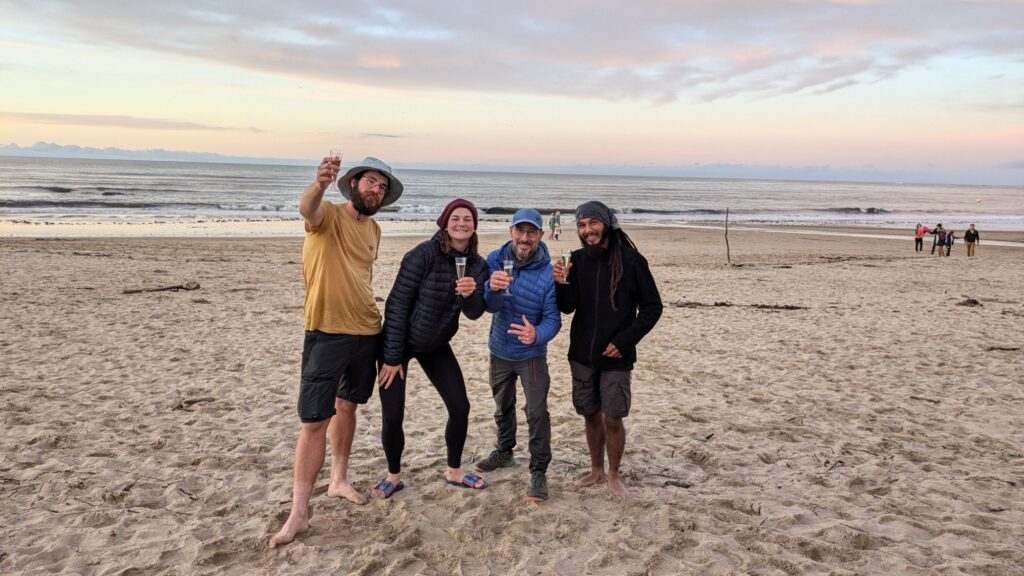
By the end of October 2024, more than one hundred days after his departure, Hugo reaches the end of the route in Hendaye, standing barefoot in the sand, eyes fixed on the ocean. He has done it.
An Unforgettable Adventure
What does he take away from this journey? Above all, the emotional reactions of certain people he met along the way left a deep impression on him. When they realise that hikers are crossing France for months at a time, a thirst for adventure begins to flow through their veins again. For many, Hugo’s journey embodies a dreamed pause, a sense of freedom buried years ago.
Paradoxically, Hugo tells me, one of the most difficult moments comes after the trail ends. Returning to what is called normal life is brutal. He speaks openly about this period of disorientation, sometimes referred to as post trek depression. Coming back requires almost as much courage as leaving.
If he were to do it again, he would start more slowly. He would take even more time for encounters. Because they, just as much as the walking itself, gave meaning to the journey.
Today, Hugo no longer plans far ahead. He simply knows that he will continue to walk. Perhaps the HexaTrek again. Perhaps other long crossings, such as linking the Mercantour and the GR20. He no longer seeks to be followed or to collect perfect images. He prefers to live fully in the present moment.
To those facing hardship and dreaming of adventure, Hugo offers a powerful message. We only have one life, fragile and precious. If the desire is there and health allows it, then we must dare. Now. Do not put it off. And to those who hesitate, he reminds them that fear does not prevent us from moving forward. There is always a solution. Always someone willing to help. The trail, he says, is kind.
Bravo Charlotte très bel article sur ton ami! Bravo Hugo! Ça été un plaisir de te rencontrer à Carcassonne 😊
Merci !! 🙂
Bel article ! C’est super d’entendre des histoires inspirantes comme celle-là 🙂
Merci 🥰😊